
Uncategorized • June 2, 2026

How to Prioritize School Districts and Property Value When Buying and Selling

How to Prioritize School Districts and Property Value When Buying and Selling

Few factors influence long-term property value and resale potential like school districts. Even for buyers without school-aged children, the reputation of local schools can significantly impact buyer demand, neighborhood prestige, and overall appreciation.

With so many elements at play, from test scores to private school proximity to future development, how should you prioritize school district quality when evaluating a high-end home purchase? Here’s how to navigate this essential yet often overlooked element of real estate valuation.

Buying a home

Understand the school district premium
Homes within top-rated public school zones may increase in value by 10 to 25 percent. This can be especially true in competitive markets. In luxury real estate markets, this can translate to hundreds of thousands in additional property value. This value lies not just in the physical home, but also in the surrounding neighborhood’s brand identity.

How to navigate: Ask your agent for a comparative market analysis that isolates similar homes inside and outside of a top school zone. This will give you a clearer picture of how much of the asking price is driven by educational reputation versus structure, design, or location.

Watch for up-and-coming districts
Astute buyers understand that emerging school districts can offer long-term equity upside. As new schools are built or underperforming schools are revitalized through funding and community initiatives, home values nearby often rise sharply over the next five to 10 years.

How to navigate: Ask your agent or city planner about bond measures, rezoning plans, or school renovations in progress. Purchasing in a district on the cusp of improvement can give you access to a neighborhood before prices catch up with future demand.

Factor in school zones for secondary properties
Even if the home is a vacation property or second residence, school zones still matter.  Because future buyers may want to make it their primary residence, or you may decide to rent it long-term, families will prioritize school access.

How to navigate: Look at school district maps and overlay them with zoning, HOA restrictions, and resale comps. Even in resort towns or suburban luxury developments, this data can future-proof your investment.

Selling a home

Assess private accessibility
Some buyers may weigh access to elite private schools just as heavily as public district ratings. A top-tier private institution within a 15-minute drive may mitigate concerns over a mediocre public zone, especially when considering tuition assistance, legacy programs, or faith-based curriculum.

How to navigate: If the public school zone isn’t exceptional, highlight its proximity to private academies, international schools, or magnet programs. Include commute times, carpool options, and partnerships with local communities in your marketing or buying criteria.

Be transparent with school details 
A common misconception is that school districts only matter to families. In reality, even buyers without school-aged children may pay a premium for homes in A+ school zones, because they understand the resale advantage they offer.

How to navigate: Ensure your listing description or buyer’s checklist includes school performance highlights, even if you’re marketing your home to empty nesters or professionals.

School districts shouldn’t just be a checkbox. They should be a strategic factor when you’re evaluating real estate opportunities.


Uncategorized • June 2, 2026

How Federal Rate Increases Affect Credit Cards and Loans

How Federal Rate Increases Affect Credit Cards and Loans

If you’ve ever noticed a rise in interest rates in the news or saw your credit card bill get a little higher, there’s one federal agency that you can look to: the Federal Reserve Board.

When the Fed raises interest rates, most borrowers with car and home loans won’t see their rates change because they’ve locked in rates. People getting new loans, however, will see the higher rates, as will credit card users.

For a U.S. household with the average credit card debt of $10,995, a .25 percent hike in interest rates will make carrying a credit card balance a bit more expensive.

Technically called the federal funds rate, the interest rate the Fed sets is the rate banks use to trade federal funds. It is almost exactly correlated with the prime rate, which is what credit card companies typically charge their largest, most credit-worthy corporate clients.

From there, a change in the prime rate follows with credit card interest rate changes that consumers see. Credit card interest rates will usually increase during a day of increased federal funds rates, and usually by the same amount.

Carrying a credit card balance, also known as revolving credit, is where credit card users will feel the pain of a Fed interest rate hike. An estimated 40 percent of credit card users carry a balance from month to month, and should see their costs climb immediately after a Fed rate hike.

Most credit cards have variable interest rates. As banks see their borrowing costs rise, they raise rates on credit cards.

If the Fed increases interest rates during the middle of a credit card billing cycle, for instance, customers may not see the increase until their next statement is due. But their rate may rise on new purchases immediately.

Credit card minimum payments are typically set at 1 – 2 percent of the principal balance, plus any interest accrued during the billing period. Rising interest rates will increase the accrued interest and minimum due, though not dramatically.

A .25 percent increase in interest rates causes the minimum amount due on a credit card to jump by $2 for every $10,000 of credit card debt. That’s not a lot of money, but two or three more Fed rate jumps in a year and it can add up.

Uncategorized • June 2, 2026

Financial Red Flags

8 Signs You’re Headed Toward Financial Disaster

Most everyone deals with money troubles at some point. However, according to American Consumer Credit Counseling (ACCC), a non-profit group, many people may be headed toward financial disaster without even knowing it.

To help determine if you’re in danger of serious financial problems, ACCC offers eight telltale signs:

1. Not paying your bills on time (or at all). Paying your bills late leads to extra charges and can have a significant impact on your credit score. Some companies will even increase your interest rate after just one late payment. Missing bill payments altogether is a big problem–it’ll kill your credit score. Additionally, after three missed mortgage payments, some lenders will start the foreclosure procedure.

2. Struggling to make minimum payments. In most cases, the minimum monthly payment goes toward interest, not principal. Moreover, if you’re struggling to pay the minimum, you probably have way more debt than you can handle.

3. Relying on credit cards too much. Credit scores are partially calculated by your credit utilization. Consequently, being at or over your credit card limit will have a serious impact on your credit score and could lead to denied loans. If you use your credit card to make payments on other bills, you’re playing a high-risk game. Plus, you’ll end up paying more overall because of the credit card interest you accrue.

4. Taking cash advances out on your credit cards. While it may seem like an easy way to get fast cash, taking out a cash advance on your credit cards is a bad idea. Cash advances on your credit card usually come with a transaction fee and are typically subject to significantly higher interest rates.

5. Getting denied credit. Being refused credit is a red flag that you’re on the verge of a personal finance emergency. If you’re denied, it most often means your credit score is extremely low and the company views you as too high of a risk.

6. Living beyond your means. We all know that we should be saving a little each month, and there’s no way you can save if you’re living paycheck to paycheck or, worse, spending more than you earn. Struggling to make ends meet or being in the red month after month is very stressful and can cause major financial problems, especially if an emergency occurs.

7. Dipping into savings or retirement. People dip into their savings and retirement funds for a number of reasons ranging from medical expenses to mortgage loan distress. While pulling from these sources may seem like a good option in the short term, the long-term impacts can potentially be devastating.

8. Tossing out bills. They say ignorance is bliss, but ignoring bills will only lead to heartache. Throwing your bills away before opening them is a clear sign that you’ve given up. While opening the bills may cause you stress, it’s not too late to get a handle on your finances.

By catching these warning signs now, you may be able to avoid serious financial trouble. You can also research and find trustworthy resources available to help you get back on track.

This article is intended for informational purposes only and should not be construed as professional or legal advice.


Uncategorized • June 1, 2026

How Music can change your brain

How Music Lessons Can Help Your Child’s Development

Music is an integral part of life from an early age. Parents sing and play soothing music for babies to help them fall asleep. Music can help with intellectual development. When children begin preschool, teachers sing songs to help them learn about letters, colors, animals and a host of other topics. Music can help children express their emotions in a positive way. Dancing to a song can help kids develop motor skills. An early love of music leads many children to later take music lessons and join a band, which offers further benefits.

Benefits of Music Lessons
When children are old enough, they can start formal music lessons. Learning to play an instrument can help with development in several ways. Children can learn about the mechanics of how an instrument works and develop hand-eye coordination. Many instruments require children to learn to use both hands independently while maintaining the correct posture. This can help them develop coordination that can help in other tasks.

Studying music can help children learn mathematical concepts, such as fractions and recognizing patterns. This can help them more easily pick up advanced mathematical ideas later.

Learning to play an instrument teaches dedication, patience and perseverance. This is because practicing an instrument requires children to focus intently, often for hours at a time. This can help them when they are facing academic challenges or other hurdles, and help them succeed in any of their future endeavors.

The study of music can help children understand and appreciate other cultures. They can learn about people from around the world and see how similar ideas can be expressed in different ways.

Taking music lessons with other children requires them to listen to each other and give and receive constructive criticism. They also need to work together and do their part to contribute to the overall performance.

#AnnapolisRealEstateMarket, #AnneArundelCountyLiving, #CroftonRealEstate, #DreamHome, #GambrillsRealtor, #MarylandRealEstate, #MoveWithKathie., #OdentonHomes, #SeniorDownsizing


Uncategorized • May 19, 2026

When to refinance

When Refinancing Your Auto Loan Makes Sense

If you’ve been making on-time payments on an auto loan for a year or more, it may be a good time to consider refinancing the loan so that you can lower your monthly payments.

Refinancing shouldn’t cost you anything as auto loans don’t typically have a prepayment penalty and applying for a refinance has no application fee.

Even if you’re happy with your car loan, it can make sense to refinance. Here are some situations when refinancing is worthwhile:

Interest Rates Dropped
If interest rates are lower now than when you first got your car loan, refinancing could lower your interest rate. This will allow you to save money in interest, which you can pocket, or free up some money that you can put toward paying off more of the principal, which will enable you to pay off your auto loan quicker.

Improved Credit
Most people improve their credit scores over time. If your credit score wasn’t good when you first got your car loan, or you didn’t know what it was at the time, check it now to see if it has improved. You might be surprised to learn that it’s good enough to help you qualify for better loan terms. This can be as simple as going to your current lender and asking them to check your credit score so that you can qualify for a lower loan rate.

If your current lender won’t do it, there are plenty of other lenders who will not only do this for you but will also be glad to have your loan. Refinancing will pay the balance of the existing loan and create a new loan, which you’ll send money to on a monthly basis through a new lender.

Your Loan is From a Car Dealer
If your existing loan is from your car dealer, you may have been charged a higher interest rate than you would have been charged somewhere else. Maybe you didn’t shop around for loans or didn’t know you had options. Whatever the reason, if you’ve made timely payments for a year or more, chances are you can now get a better rate elsewhere.

Check your credit score and check online or in person with banks, credit unions and online lenders for a better interest rate.

Falling Behind on Payments
If you bought a car that turned out to be more than you can afford and are struggling to make the loan payments, or are having other financial difficulties, refinancing an auto loan can lower your payments. You can also extend the loan to give you more time to pay it, though that will lead to paying more interest over the life of the loan.

This article is intended for informational purposes only and should not be construed as professional or legal advice.


Uncategorized • May 18, 2026

Community

Uncategorized • May 18, 2026

A Fusion Feast

A Fusion Feast

Title: A Fusion Feast: Filipino Dinner Delights with a Twist Introduction: Welcome to a culinary adventure where flavors from different corners of the world converge on one dinner table. In this Filipino-inspired feast, we'll be blending traditional Filipino cuisine with a touch of Korean influence and a dash of creativity. Get ready to tantalize your taste buds with Kale Laing, Korean Barbecue Short Ribs, and indulge in the sweet finale of Ube Cheesecake. 1. Kale Laing Recipe: Laing is a beloved Filipino dish originating from the Bicol region, typically made with taro leaves cooked in coconut milk and spices. In this version, we'll add a healthy twist with kale, adding extra nutrients and a vibrant green color. Ingredients: * 2 cups kale leaves, chopped * 1 cup dried taro leaves (if available) * 2 cups coconut milk * 1 onion, chopped * 3 cloves garlic, minced * 1 thumb-sized ginger, sliced * 2-3 pieces red chili peppers, chopped (adjust to taste) * 1 cup shrimp paste (bagoong) * Salt to taste * 2 tablespoons cooking oil Instructions: 1. Heat oil in a pan over medium heat. Sauté garlic, onion, and ginger until fragrant. 2. Add the shrimp paste and cook for 2-3 minutes. 3. Pour in the coconut milk and bring to a simmer. 4. Add the kale leaves and dried taro leaves. Stir well. 5. Allow the mixture to simmer for 20-25 minutes or until the leaves are tender and the sauce has thickened. 6. Season with salt to taste and adjust the spiciness with more chili peppers if desired. 7. Serve hot with jasmine rice. 8. Korean Barbecue Short Ribs Recipe: Korean barbecue short ribs, or Galbi, are known for their savory, sweet, and slightly tangy flavors. Let's infuse this Korean delight into our Filipino dinner for a delightful fusion experience. Ingredients: * 2 lbs beef short ribs * ½ cup soy sauce * ¼ cup brown sugar * 2 tablespoons honey * 2 tablespoons sesame oil * 4 cloves garlic, minced * 1 teaspoon ginger, grated * 2 green onions, chopped * Sesame seeds for garnish Instructions: 1. In a bowl, mix soy sauce, brown sugar, honey, sesame oil, garlic, ginger, and green onions to make the marinade. 2. Place the short ribs in a shallow dish or a resealable plastic bag and pour the marinade over them, ensuring they are well coated. Marinate for at least 2 hours, or preferably overnight in the refrigerator. 3. Preheat grill to medium-high heat. Remove ribs from marinade and grill for about 5-7 minutes on each side, or until cooked to desired doneness. 4. Garnish with sesame seeds and chopped green onions before serving. 5. Ube Cheesecake Recipe: Ube, or purple yam, is a staple ingredient in Filipino desserts, known for its vibrant purple hue and sweet flavor. Combine it with the creamy goodness of cheesecake for an unforgettable dessert experience. Ingredients: * 2 cups graham cracker crumbs * ½ cup unsalted butter, melted * 2 (8 oz) packages cream cheese, softened * ½ cup granulated sugar * 2 large eggs * 1 teaspoon vanilla extract * 1 cup mashed cooked purple yam (ube) * Purple food coloring (optional) * Whipped cream for topping Instructions: 1. Preheat the oven to 325°F (160°C). Grease a 9-inch springform pan. 2. In a mixing bowl, combine graham cracker crumbs and melted butter. Press onto the bottom of the prepared pan. 3. In another bowl, beat cream cheese and sugar until smooth. Add eggs, one at a time, beating well after each addition. Stir in vanilla extract. 4. Fold in mashed purple yam until well combined. Add a few drops of purple food coloring if desired for a more vibrant color. 5. Pour the mixture over the crust and spread evenly. 6. Bake in the preheated oven for 45-50 minutes or until the center is almost set. Remove from the oven and let it cool completely. 7. Chill in the refrigerator for at least 4 hours or overnight. 8. Serve slices of Ube Cheesecake topped with whipped cream for a delightful end to your fusion feast. Conclusion: With this fusion feast, we've taken classic Filipino dishes and added a creative twist, resulting in a dinner experience that's sure to impress. From the hearty Kale Laing to the succulent Korean Barbecue Short Ribs, and finally, the indulgent Ube Cheesecake, every dish on this menu brings together flavors from different cultures for a memorable dining experience. So gather your loved ones, set the table, and enjoy this culinary journey of fusion flavors!

Title: A Fusion Feast: Filipino Dinner Delights with a Twist

Introduction:
Welcome to a culinary adventure where flavors from different corners of the world converge on one dinner table. In this Filipino-inspired feast, we’ll be blending traditional Filipino cuisine with a touch of Korean influence and a dash of creativity. Get ready to tantalize your taste buds with Kale Laing, Korean Barbecue Short Ribs, and indulge in the sweet finale of Ube Cheesecake.

Kale Laing Recipe:
Laing is a beloved Filipino dish originating from the Bicol region, typically made with taro leaves cooked in coconut milk and spices. In this version, we’ll add a healthy twist with kale, adding extra nutrients and a vibrant green color.
Ingredients:

2 cups kale leaves, chopped
1 cup dried taro leaves (if available)
2 cups coconut milk
1 onion, chopped
3 cloves garlic, minced
1 thumb-sized ginger, sliced
2-3 pieces red chili peppers, chopped (adjust to taste)
1 cup shrimp paste (bagoong)
Salt to taste
2 tablespoons cooking oil
Instructions:

Heat oil in a pan over medium heat. Sauté garlic, onion, and ginger until fragrant.
Add the shrimp paste and cook for 2-3 minutes.
Pour in the coconut milk and bring to a simmer.
Add the kale leaves and dried taro leaves. Stir well.
Allow the mixture to simmer for 20-25 minutes or until the leaves are tender and the sauce has thickened.
Season with salt to taste and adjust the spiciness with more chili peppers if desired.
Serve hot with jasmine rice.
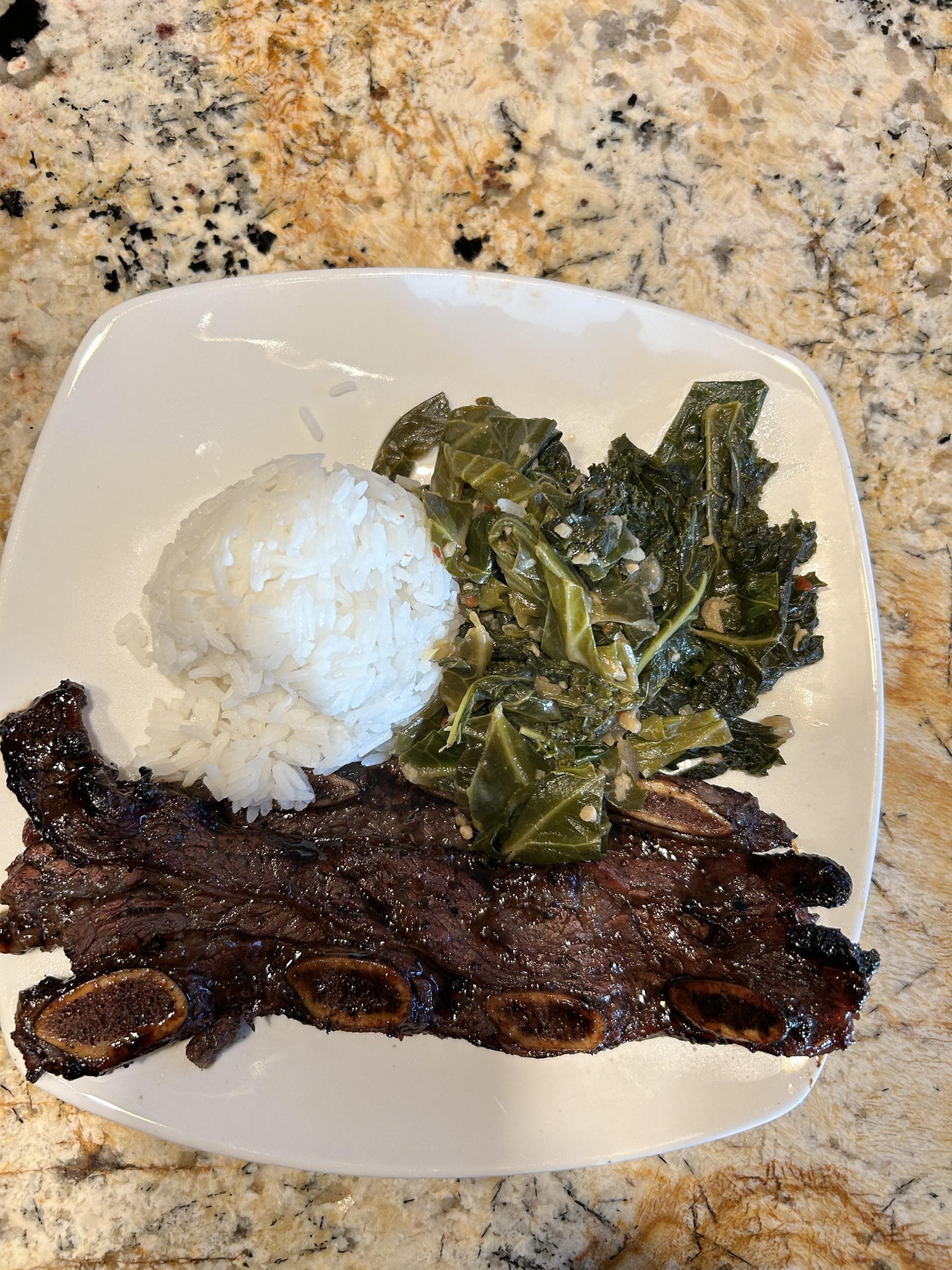
Korean Barbecue Short Ribs Recipe:
Korean barbecue short ribs, or Galbi, are known for their savory, sweet, and slightly tangy flavors. Let’s infuse this Korean delight into our Filipino dinner for a delightful fusion experience.
Ingredients:

2 lbs beef short ribs
½ cup soy sauce
¼ cup brown sugar
2 tablespoons honey
2 tablespoons sesame oil
4 cloves garlic, minced
1 teaspoon ginger, grated
2 green onions, chopped
Sesame seeds for garnish
Instructions:

In a bowl, mix soy sauce, brown sugar, honey, sesame oil, garlic, ginger, and green onions to make the marinade.
Place the short ribs in a shallow dish or a resealable plastic bag and pour the marinade over them, ensuring they are well coated. Marinate for at least 2 hours, or preferably overnight in the refrigerator.
Preheat grill to medium-high heat. Remove ribs from marinade and grill for about 5-7 minutes on each side, or until cooked to desired doneness.
Garnish with sesame seeds and chopped green onions before serving.
Ube Cheesecake Recipe:
Ube, or purple yam, is a staple ingredient in Filipino desserts, known for its vibrant purple hue and sweet flavor. Combine it with the creamy goodness of cheesecake for an unforgettable dessert experience.
Ingredients:

2 cups graham cracker crumbs
½ cup unsalted butter, melted
2 (8 oz) packages cream cheese, softened
½ cup granulated sugar
2 large eggs
1 teaspoon vanilla extract
1 cup mashed cooked purple yam (ube)
Purple food coloring (optional)
Whipped cream for topping
Instructions:

Preheat the oven to 325°F (160°C). Grease a 9-inch springform pan.
In a mixing bowl, combine graham cracker crumbs and melted butter. Press onto the bottom of the prepared pan.
In another bowl, beat cream cheese and sugar until smooth. Add eggs, one at a time, beating well after each addition. Stir in vanilla extract.
Fold in mashed purple yam until well combined. Add a few drops of purple food coloring if desired for a more vibrant color.
Pour the mixture over the crust and spread evenly.
Bake in the preheated oven for 45-50 minutes or until the center is almost set. Remove from the oven and let it cool completely.
Chill in the refrigerator for at least 4 hours or overnight.
Serve slices of Ube Cheesecake topped with whipped cream for a delightful end to your fusion feast.
Conclusion:
With this fusion feast, we’ve taken classic Filipino dishes and added a creative twist, resulting in a dinner experience that’s sure to impress. From the hearty Kale Laing to the succulent Korean Barbecue Short Ribs, and finally, the indulgent Ube Cheesecake, every dish on this menu brings together flavors from different cultures for a memorable dining experience. So gather your loved ones, set the table, and enjoy this culinary journey of fusion flavors!

Uncategorized • May 18, 2026

ORANGE GRILLED MARMALADE CHICKEN

ORANGE GRILLED MARMALADE CHICKEN

Orange grilled marmalade chicken

Title: Grilled Marmalade Chicken and Roasted Green Beans: A Flavorful Delight


Are you ready to elevate your dinner game with a mouthwatering dish that combines sweet and savory flavors in a delectable way? Look no further than Grilled Marmalade Chicken, accompanied by roasted green beans, tomatoes, garlic, and caramelized onions. This recipe is the perfect marriage of succulent chicken, tangy marmalade, and the earthy goodness of roasted vegetables. In this blog, we’ll guide you through the steps to create this scrumptious dish that’s sure to impress your family and friends.

Ingredients:

For the Grilled Marmalade Chicken:

  • 4 boneless, skinless chicken breasts
  • 1/2 cup orange marmalade
  • 2 tablespoons soy sauce
  • 2 tablespoons Dijon mustard
  • 1 teaspoon minced garlic
  • 1/2 teaspoon dried thyme
  • Salt and pepper to taste

For the Roasted Green Beans with Tomatoes, Garlic, and Caramelized Onions:

  • 1 pound fresh green beans, trimmed
  • 1 pint cherry tomatoes
  • 4 cloves garlic, minced
  • 1 large onion, thinly sliced
  • 2 tablespoons olive oil
  • Salt and pepper to taste

Instructions:

  1. Marinating the Chicken:
    a. In a bowl, combine the orange marmalade, soy sauce, Dijon mustard, minced garlic, dried thyme, salt, and pepper. Mix well.
    b. Place the chicken breasts in a resealable plastic bag or a shallow dish and pour the marinade over them.
    c. Seal the bag or cover the dish, and refrigerate for at least 30 minutes, allowing the flavors to meld.
  2. Preparing the Roasted Green Beans:
    a. Preheat your oven to 425°F (220°C).
    b. In a large mixing bowl, toss the trimmed green beans and cherry tomatoes with 1 tablespoon of olive oil, minced garlic, salt, and pepper. Mix until everything is well coated.
    c. Spread the green beans and tomatoes on a baking sheet in a single layer.
    d. Roast in the preheated oven for 20-25 minutes or until the green beans are tender and slightly caramelized and the tomatoes are blistered.
  3. Caramelizing the Onions:
    a. While the green beans are roasting, heat the remaining 1 tablespoon of olive oil in a skillet over medium-low heat.
    b. Add the thinly sliced onions and cook them slowly, stirring occasionally, until they turn a rich, golden brown, and become caramelized. This process may take about 20-25 minutes.
  4. Grilling the Chicken:
    a. Preheat your grill to medium-high heat.
    b. Remove the chicken from the marinade and grill for approximately 6-8 minutes per side, or until the internal temperature reaches 165°F (74°C) and the chicken is no longer pink in the center.
  5. Serving:
    a. Once the chicken is grilled to perfection, serve it alongside the roasted green beans, caramelized onions, and blistered cherry tomatoes.
    b. Spoon any remaining marmalade sauce over the grilled chicken for an extra burst of flavor.

Conclusion

This Grilled Marmalade Chicken with Roasted Green Beans, Tomatoes, Garlic, and Caramelized Onions is a delightful and well-balanced meal that’s perfect for a weeknight dinner or a special occasion. The combination of sweet, tangy, and savory flavors is simply irresistible. With just a little bit of preparation, you can create a restaurant-quality dish right in the comfort of your own kitchen. Enjoy the juicy, flavorful chicken and the roasted vegetables that are the perfect accompaniment. This recipe is sure to become a favorite in your household, so give it a try and savor the delicious results.


Uncategorized • May 18, 2026

Kitchen Back Splash

White hygge kitchen with hexagonal tiles, wooden countertop and simple cupboards

Kitchen Trends That Are Going Out of Fashion

Most of us spend a lot of time in the kitchen, preparing meals and cleaning up. In many cases, we spend so much time in our familiar kitchen space that we don’t pay much attention to what it looks like.

But the trends, they are a-changin’. Today’s kitchens are sleek and practical. Design experts list seven kitchen looks that are quickly going out of style:

Short backsplashes. Backsplashes that reach up to six to eight inches above the countertop are sorely outdated. If you’re up for a remodel, take the backsplash all the way up to the upper cabinets to make your kitchen feel bigger and cleaner. 

Distressed wood cabinets. Once the darling of country-style kitchens, the clunky distressed wood of yesteryear is giving way to natural wood or white finishes.

Over the stove microwaves. When microwaves came into fashion, homeowners put them over the stove to save counter space. But today’s families want necessities accessible for the entire family. Some are redesigning cabinets to move the microwave into an under-counter nook where smaller family members can reach it. 

Top-of-cabinet décor. Gone are the days of filling the space between the tops of your cabinets and the ceiling with dusty accessories like artificial flowers or greenery. Removing them from above the cabinets gives the room a more open feel.

Hanging pots and pans. Once, every kitchen shown in a magazine had a big, beautiful, hanging rack filled with copper or stainless-steel pots and pans. Kitchen designers today are making room for them in drawers or cabinet, trading in that outdated country look for cleaner, minimalist lines. 

Anything but stainless steel. Over the years, kitchen appliances have gone from white to copper to avocado green and back again. But the desired look today is the cool, sleek look of stainless steel.

Kitchen desks. At one point in time, every upscale kitchen featured desk space—a little nook where you could scan the mail, pay bills, etc. But those mess-collectors are now yesterday’s news. Moving desk chores to another room can give your kitchen extra space and alternative storage options.


Uncategorized • May 18, 2026

Retro Colors Are Coming Back

Retro Colors Make a Comeback: What’s Hot in Decor Right Now

Everything old is new again, and that goes for decorating with color. While the last decade in home décor has largely been defined by white and varying shades of beige and gray, today’s designers are harking back to yesteryear with paint colors, furniture and even kitchen appliances.

Part art deco, part ‘50s suburban and part ‘60s mod, these awesome retro colors are fresh and refreshed to fit today’s tastes, say the color mavens at Sherwin Williams, whose wall color faves this year include shades of pink, aqua and pale or mustard yellows with accents of slate or peppery coral—great ways to set off the stark white of baseboards, crown moldings and door frames.

Big Chill, a retro appliance company launched in 2001, is finding huge success with its growing line of refrigerators, stoves and dishwashers in pink, aqua, yellow and more that bring a spirit of nostalgia to today’s kitchens, along with their high-tech efficiency.

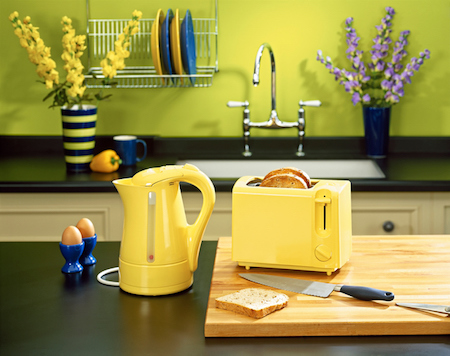
Small kitchen appliances from crockpots to mixers and toasters are now available in a wide range of bold and retro colors, and look for pink velvet, pale blue and teal sofas from a variety of furniture design companies as vintage furnishings make a huge comeback.

You might also find bright orange and sage green shantung side chairs, shabby-chic and pastel-colored buffets and bookshelves and other accessories, and don’t miss the lighting display in most home stores, where Tiffany lamps and vintage shades are gaining ground in sales.

A roomful of these vintage colors can make you feel a little nostalgic, a little happier and a little more optimistic. What more could anyone ask for?

Small appliances on a stylish kitchen counter